Electricity bills in Pakistan keep rising, especially during summer when fans, ACs, and refrigerators run almost non-stop. Many families look at their bill and feel confused about where all the units went.
This is where an electricity usage diary becomes really helpful. It’s a simple way to track which appliances are using how much electricity every day.
In this guide, you’ll learn how to create your own electricity diary at home, even if you are not technical. We’ll also look at real examples from Pakistani households, including WAPDA and K-Electric users, so you can understand your power usage better and take control of your monthly bill.
What is an Electricity Usage Diary?
Featured Snippet Answer (40–60 words):
An electricity usage diary is a simple record where you note daily or weekly electricity consumption of your home appliances. It helps you understand how many units (kWh) you are using, which devices consume the most power, and how you can reduce your monthly electricity bill effectively.
An electricity diary is not complicated. You don’t need special tools or apps. A notebook or even a mobile notes app is enough.
You simply track:
- Which appliances you use
- How long you use them
- Estimated electricity units consumed
Think of it like a food diary, but for electricity.
Why You Should Start an Electricity Usage Diary
Understand where your bill is going
Most people only see the final electricity bill from WAPDA or K-Electric and feel shocked. A diary helps break down the mystery.
Identify energy-hungry appliances
You may discover:
- Your AC is using more units than expected
- Old refrigerator consumes extra power
- Water pump runs longer than needed
Control peak-time usage
Electricity tariffs often increase during peak hours. Tracking usage helps you shift heavy loads to off-peak times.
Build smart habits
Once you start writing things down, you naturally become more careful. Many families reduce unnecessary usage just by tracking.
How to Create a Simple Electricity Usage Diary at Home
Step 1: Choose your format
You can use:
- A notebook
- Mobile notes app
- Spreadsheet (Excel or Google Sheets)
Keep it simple. Don’t overthink it.
Step 2: List all major appliances
Write down:
- Air conditioner (AC)
- Fans
- Refrigerator
- LED bulbs
- Water pump
- Iron
- TV
These are your main electricity users.
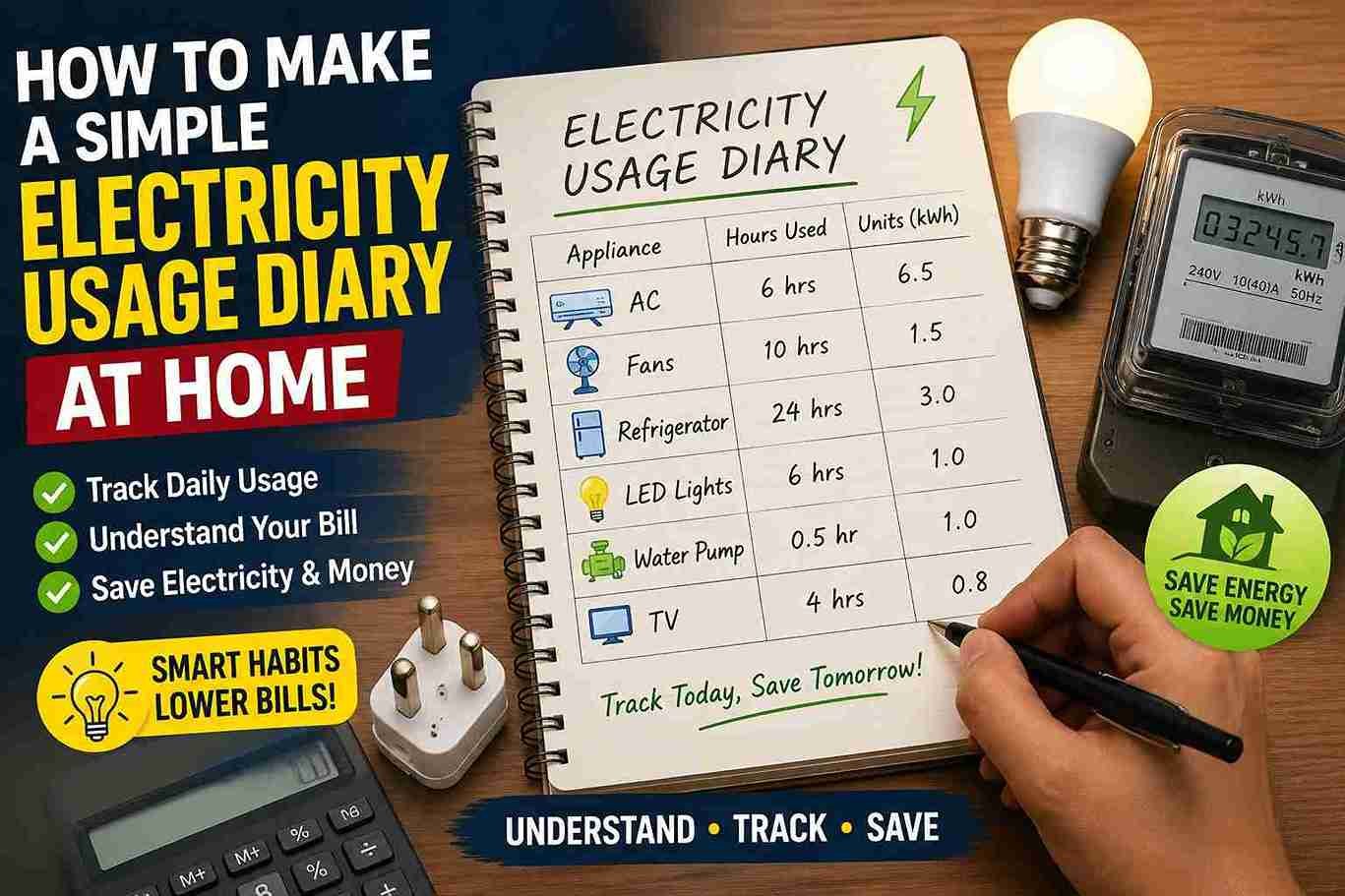
Step 3: Track daily usage
Every day, note:
- Hours used
- Approximate units (kWh)
- Time of usage
Example:
| Appliance | Hours Used | Estimated Units |
|---|---|---|
| AC | 6 hours | 6–8 units |
| Fan | 10 hours | 1–2 units |
| Fridge | 24 hours | 2–4 units |
Step 4: Observe patterns weekly
At the end of the week, check:
- Which appliance used the most electricity?
- Which day had highest usage?
- Any unusual spikes?
Step 5: Compare with your bill
Match your diary with your actual electricity bill. This helps you understand differences and estimate future bills better.
Real-Life Example from a Pakistani Household
A middle-class family in Lahore noticed their bill increased sharply during summer. After maintaining an electricity usage diary, they discovered:
- AC was running longer than expected at night
- Refrigerator door was frequently opened
- Water pump was switched on multiple times unnecessarily
After small changes like:
- Reducing AC usage by 1–2 hours
- Setting fridge temperature properly
- Scheduling water pump usage
Their next month’s usage became more balanced.
This kind of improvement is common in many WAPDA households once tracking begins.
Common Mistakes People Make in Electricity Tracking
Ignoring standby power
Devices like TVs and chargers still consume power even when not in use.
Not tracking small appliances
People often forget:
- Wi-Fi routers
- Phone chargers
- LED strip lights
Guessing instead of noting
Estimates are okay, but consistency matters more than accuracy.
Understanding Electricity Units (kWh)
Electricity is measured in kilowatt-hours (kWh), commonly called “units”.
- 1 unit = 1 kWh of electricity
- Your bill is based on total units consumed
Example:
If your home uses 300 units in a month, your bill is calculated based on that total usage plus taxes and tariffs set by NEPRA.
How Appliances Affect Your Electricity Usage Diary
Air Conditioner (AC)
AC is usually the biggest contributor in summer.
- Inverter AC saves more energy over time
- Non-inverter AC consumes more units when used continuously
Refrigerator
Runs 24/7, so even small efficiency issues matter.
- Old models consume more electricity
- Frequent door opening increases load
Ceiling Fans
Low consumption but still important in long usage hours.
Water Pump
Often ignored but can spike usage if overused.
Energy-Saving Tips Based on Your Diary
Once you maintain an electricity usage diary, you can apply changes like:
- Turn off appliances when not needed
- Use LED bulbs instead of old ones
- Run AC at moderate temperature (24–26°C)
- Avoid peak hour heavy usage
- Clean AC filters regularly
- Check fridge sealing
These habits improve energy efficiency without changing lifestyle too much.
Seasonal Impact on Electricity Usage in Pakistan
Summer
- AC usage increases
- Fans run all day
- Bills go significantly higher
Winter
- Heater usage increases (in some areas)
- Less fan/AC usage
- Overall lower units
Understanding this seasonal pattern helps you plan better.
Smart Tools for Tracking Electricity
If you want more accuracy, you can use:
- Smart plugs
- Energy monitoring devices
- Mobile apps (basic tracking)
These tools are optional but helpful.
Conclusion
Creating an electricity usage diary is one of the simplest ways to understand your home’s power consumption. It helps you see where electricity is going, which appliances are using more units, and how you can adjust daily habits.
For Pakistani households dealing with rising electricity costs, this small habit can make a real difference over time. You don’t need complex tools or technical skills, just consistency and attention.
Try it for a week and observe your patterns. Small changes in energy habits can make a noticeable difference over time.