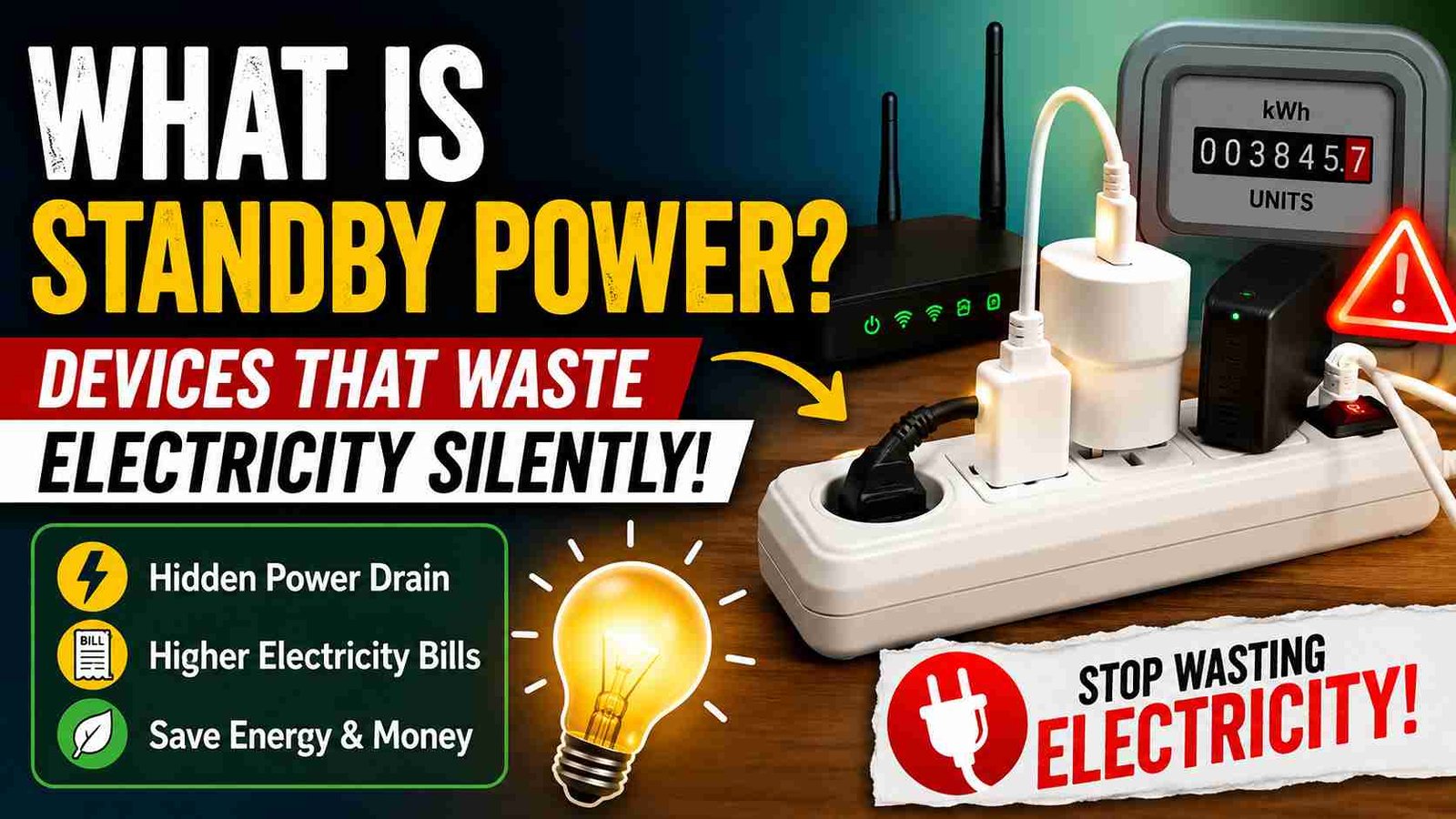
Have you ever wondered why your electricity bill seems higher than expected even when you’re careful about using appliances? Many Pakistani households focus on large electricity users like air conditioners and refrigerators but often overlook a hidden source of energy consumption.
The truth is that many devices continue using electricity even when they appear to be turned off. This hidden usage is called standby power, and it can quietly add extra units to your monthly bill over time.
In this guide, you’ll learn what standby power is, which devices commonly waste electricity, how it affects your electricity bill, and practical ways to reduce unnecessary power usage at home.
What Is Standby Power?
Standby power is the electricity consumed by appliances and electronic devices when they are switched off but still plugged into a power source.
Many devices remain partially active to perform background functions such as:
- Displaying clocks
- Receiving remote control signals
- Maintaining network connections
- Saving settings and preferences
- Updating software automatically
Although the power consumption of a single device may seem small, multiple devices operating continuously can contribute to noticeable energy consumption throughout the year.
Why Is It Called Vampire Power?
You may hear standby power consumption referred to as “vampire power” or “phantom load.”
The name comes from the fact that these devices silently draw electricity day and night without providing any visible benefit most of the time.
Does Standby Power Increase Your Electricity Bill?
Short Answer
Yes. Standby power can increase your electricity bill because devices continue consuming electricity 24 hours a day, even when not actively being used.
The impact varies depending on the number of devices in your home and their individual power requirements.
How It Adds Up Over Time
Consider a typical family in Pakistan that owns:
- Two televisions
- One Wi-Fi router
- A microwave oven
- A gaming console
- Several phone chargers
- A printer
Each device may use only a small amount of electricity while idle. However, when these devices remain plugged in every day of the year, the total units consumed (kWh) can become significant.
With rising electricity tariffs and fuel adjustment charges, even small reductions in wasted energy can help households manage expenses more effectively.
Which Devices Waste Electricity Silently?
Some appliances are more likely to consume standby power than others.
Television and Entertainment Systems
Modern TVs often remain partially active so they can respond instantly to remote controls.
Common hidden electricity users include:
- Smart TVs
- Sound systems
- Streaming devices
- Set-top boxes
If the standby indicator light is on, the device is usually consuming some electricity.
Wi-Fi Routers and Modems
Internet routers operate continuously in most homes.
While routers provide important connectivity, they also contribute to ongoing power usage throughout the day and night.
Phone and Laptop Chargers
Many people leave chargers plugged into wall sockets permanently.
Even when a phone is not connected, some chargers continue drawing a small amount of electricity.
Microwave Ovens
Microwave displays, digital clocks, and control panels require continuous power.
A microwave showing the current time is typically using electricity even when not heating food.
Gaming Consoles
Gaming systems often remain connected to the internet for updates and downloads.
This can increase energy consumption, especially when power-saving settings are disabled.
Desktop Computers and Monitors
Many computers enter sleep mode rather than shutting down completely.
Sleep mode generally uses less electricity than active operation but still consumes energy.
Printers
Wireless printers frequently stay ready to receive print commands, resulting in ongoing standby electricity use.
Appliances That Usually Consume the Most Standby Power
| Device | Typical Standby Activity |
|---|---|
| Smart TV | Remote signal reception |
| Gaming Console | Updates and downloads |
| Set-Top Box | Always-on connectivity |
| Wi-Fi Router | Continuous operation |
| Microwave | Clock display |
| Printer | Network readiness |
| Desktop Computer | Sleep mode functions |
| Audio System | Remote control response |
Actual consumption varies by model, age, and manufacturer.
How Can You Identify Standby Power in Your Home?
Short Answer
If a device shows lights, displays a clock, stays connected to Wi-Fi, or responds instantly to a remote control, it is likely using standby power.
Practical Signs to Watch For
Look for:
- LED indicator lights
- Digital displays
- Warm power adapters
- Continuous internet connectivity
- Devices that start instantly
An energy monitoring device or smart plug can help measure actual electricity usage.
How Much Electricity Can Standby Devices Use?
The exact amount depends on:
- Number of appliances
- Device efficiency
- Usage habits
- Home size
According to energy efficiency research and recommendations from organizations such as the International Energy Agency (IEA), standby electricity can represent a noticeable share of household electricity consumption in some homes.
For households already dealing with high summer electricity usage from air conditioners (AC), ceiling fans, and refrigerator usage, reducing unnecessary standby loads can support overall load management.
Simple Ways to Reduce Standby Power Consumption
Unplug Devices When Not Needed
The simplest solution is unplugging devices that are rarely used.
Examples include:
- Spare televisions
- Gaming consoles
- Extra chargers
- Audio systems
Use Smart Power Strips
Smart power strips automatically cut electricity to selected devices when they are not being used.
This makes energy-saving easier without requiring manual unplugging.
Enable Energy-Saving Modes
Many modern appliances include built-in energy efficiency settings.
Review device menus and activate available power-saving features.
Turn Off Entertainment Systems Completely
Instead of leaving devices in standby mode, switch them off completely when possible.
Upgrade Older Electronics
Newer appliances often follow improved Energy Star guidelines and consume less standby electricity.
If you’re replacing an older appliance anyway, choosing an efficient model may help reduce long-term energy use.
Real-Life Example From a Pakistani Household
A family in Lahore uses:
- One inverter AC
- One refrigerator
- Three ceiling fans
- Two televisions
- Wi-Fi router
- Several chargers
During summer, their monthly electricity bill increases due to cooling needs. After reviewing appliance habits, they discovered several devices remained plugged in continuously.
By unplugging unused chargers, enabling TV power-saving settings, and using a smart power strip for entertainment devices, they reduced unnecessary standby power consumption without changing their comfort level.
While results vary from home to home, small habits like these can contribute to better energy awareness.
Is Standby Power Important for Solar Users?
Yes.
Homes with solar panels, inverters, and battery storage systems should also pay attention to standby loads.
Reducing unnecessary electricity use helps maximize available solar energy and may improve overall system efficiency.
For households using net metering, managing avoidable energy consumption remains a smart practice even when generating their own electricity.
What Do WAPDA and K-Electric Consumers Need to Know?
Whether you receive electricity through WAPDA-linked distribution companies or K-Electric, your meter records electricity used by connected appliances.
Hidden consumption contributes to overall meter reading totals and affects the final bill.
With electricity costs continuing to be a concern across Pakistan, understanding where energy is being used is becoming increasingly important for homeowners, tenants, and small businesses.
Conclusion
Standby power is one of the most overlooked sources of household energy consumption. While individual devices may use only a small amount of electricity, the combined effect of televisions, chargers, routers, gaming consoles, and other electronics can quietly increase your monthly electricity bill.
The good news is that reducing unnecessary standby usage is usually simple. Unplug unused devices, use smart power strips, and enable energy-saving settings where available. Small changes in energy habits can make a noticeable difference over time. If you found this guide helpful, explore more electricity-saving articles to learn practical ways to manage your home’s energy use.