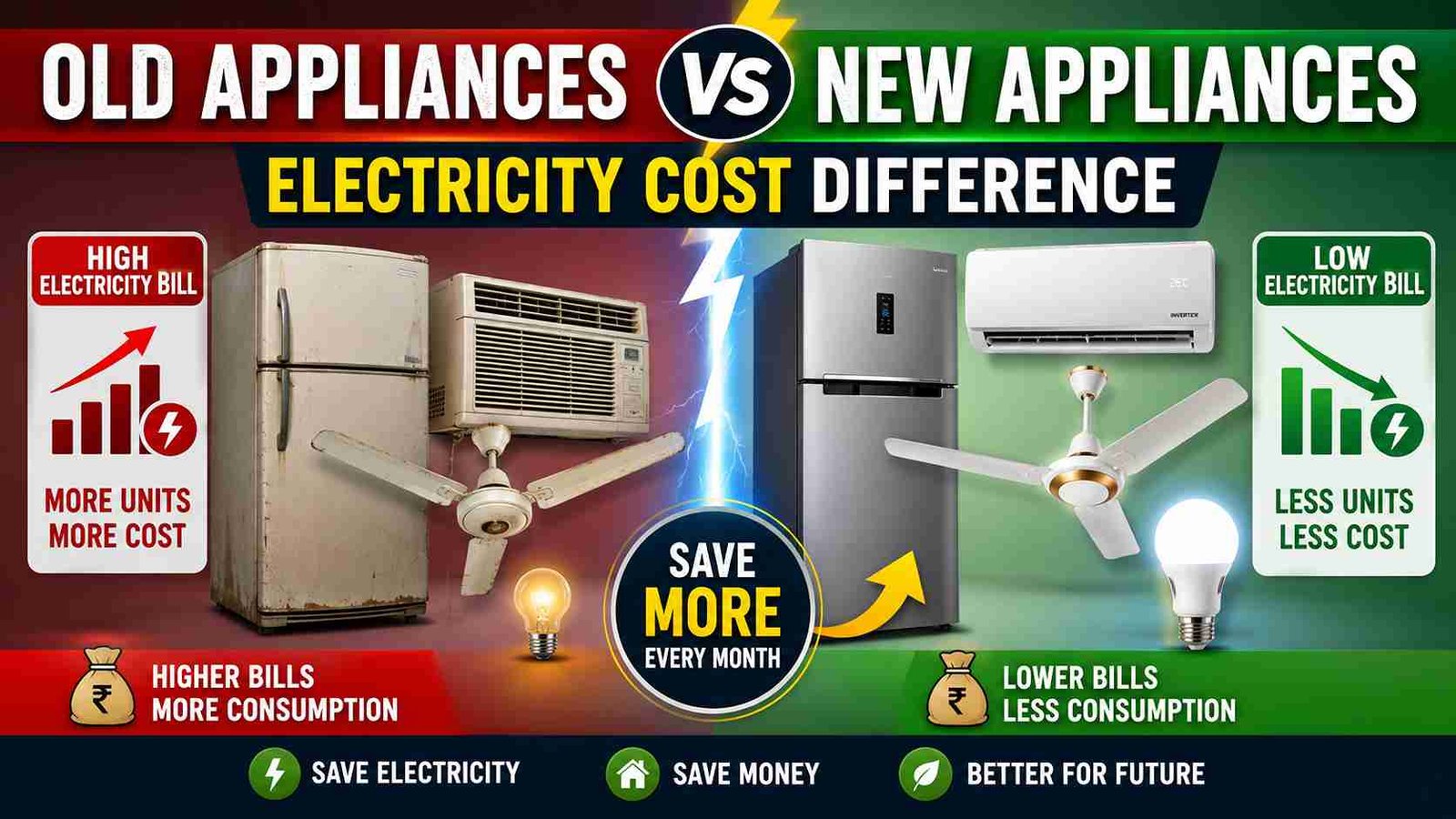
Have you ever looked at your electricity bill and wondered why it keeps increasing even though your daily habits haven’t changed much? Many households focus on switching off lights and reducing AC usage but overlook one major factor: old appliances.
In this guide, you’ll learn how older appliances compare with modern energy-efficient models, how much electricity they typically consume, and whether upgrading your appliances can help reduce long-term energy costs.
After analyzing common household electricity usage patterns in Pakistan and other regions facing rising energy prices, one thing becomes clear. Appliance age can significantly affect energy consumption, especially for devices that run for many hours every day.
What Is the Electricity Cost Difference Between Old and New Appliances?
The short answer is that modern appliances are usually designed to perform the same task while using less electricity. Older appliances often consume more power because they were built before many current energy efficiency standards existed.
For households trying to reduce monthly utility expenses, replacing very old appliances may lower power usage over time. However, the actual savings depend on appliance type, usage habits, maintenance condition, and local electricity tariff rates.
Why Do Old Appliances Use More Electricity?
Several factors contribute to higher electricity usage in older equipment.
Worn-Out Components
Motors, compressors, fans, and electrical parts become less efficient as they age. They often need more energy to perform the same work.
Outdated Technology
Older appliances were built when electricity costs were lower and efficiency standards were less strict. Modern designs focus heavily on reducing units consumed (kWh).
Poor Insulation
Many older refrigerators, freezers, and water heaters have weaker insulation, causing them to work harder.
Lack of Smart Controls
New appliances often include sensors, variable-speed motors, and automatic energy-saving features that older models don’t have.
Old Appliances vs New Appliances Comparison
| Appliance | Older Model | New Efficient Model |
|---|---|---|
| Refrigerator | Higher compressor runtime | Better insulation and efficient compressor |
| Air Conditioner | Constant-speed operation | Inverter AC technology |
| Ceiling Fan | Standard motor | Energy-efficient motor |
| LED Lighting | Older bulbs consume more power | LED bulbs use significantly less energy |
| Water Pump | Less efficient motor | Improved motor efficiency |
| Electric Heater | Basic heating element | Better temperature control |
The actual difference varies by manufacturer and usage conditions, but newer appliances generally provide better efficiency.
How Much Can an Old Refrigerator Affect Your Electricity Bill?
A refrigerator runs throughout the day, making it one of the most important appliances to evaluate.
Signs Your Refrigerator Is Using Too Much Power
- Constant compressor noise
- Excessive heat around the unit
- Damaged door seals
- Frequent temperature fluctuations
- Appliance older than 10-15 years
A family in Pakistan using an old refrigerator, two fans, and an AC during summer may notice a significant increase in monthly electricity usage compared with a similar household using newer efficient appliances.
Is an Inverter AC Better Than an Older Non-Inverter AC?
The short answer is yes in many situations.
Inverter AC vs non-inverter AC comparisons often show that inverter models adjust compressor speed according to cooling demand instead of repeatedly turning on and off.
Benefits of Inverter ACs
- Improved energy efficiency
- More stable room temperature
- Reduced compressor stress
- Lower long-term energy consumption
- Quieter operation
This is particularly useful in Pakistan, where AC usage increases sharply during hot summer months.
How Do Ceiling Fans and Lighting Affect Electricity Costs?
Many people focus only on air conditioners, but smaller appliances matter too.
Ceiling Fans
Older fan motors may draw more electricity than modern efficient designs.
Lighting
Switching from traditional bulbs to LED bulbs remains one of the simplest home upgrades.
Benefits include:
- Lower electricity use
- Longer lifespan
- Reduced replacement costs
- Less heat generation
What About Standby Power Consumption?
Many households forget about hidden electricity use.
Common Sources of Standby Power
- Television sets
- Set-top boxes
- Wi-Fi routers
- Gaming consoles
- Microwave displays
This is called standby power consumption or phantom load.
While each device uses a small amount of electricity, the combined impact over a month can increase overall energy usage.
How Can You Check If an Appliance Is Costing Too Much?
Monitor Meter Readings
Track your meter reading regularly and compare usage patterns.
Use Energy Monitoring Devices
Modern monitoring tools can show exactly how much electricity individual appliances consume.
Compare Monthly Bills
Review previous bills to identify unusual increases in units consumed (kWh).
Look for Efficiency Labels
Products following Energy Star guidelines or local efficiency standards often provide better long-term performance.
How Do Rising Electricity Costs Affect Pakistani Households?
Many households in Pakistan have experienced rising electricity expenses due to changing electricity tariff structures and increasing energy demand.
Whether you are a WAPDA consumer or served by K-Electric, appliance efficiency has become more important than ever.
Factors that commonly increase bills include:
- Summer cooling demand
- Older AC units
- Aging refrigerators
- Electric heaters during winter
- Water pumps with inefficient motors
- High usage during peak hours
Can Solar Panels Help Offset Appliance Electricity Costs?
The short answer is yes, but efficiency should still come first.
Installing solar panels can reduce dependence on grid electricity. However, running inefficient appliances on solar power still wastes energy.
Many homeowners first improve appliance efficiency and then explore:
- Net metering
- battery storage systems
- Home inverters
- Solar energy systems
This approach often makes solar investments more effective.
Practical Ways to Reduce Appliance Electricity Costs
1. Replace Very Old Appliances First
Prioritize refrigerators, ACs, and water pumps.
2. Maintain Existing Equipment
Clean filters, coils, and vents regularly.
3. Manage Usage During Peak Hours
Where applicable, shifting heavy loads away from peak hours may help manage electricity costs.
4. Improve Home Insulation
Better insulation reduces cooling and heating demand.
5. Eliminate Unnecessary Standby Loads
Switch off devices completely when not needed.
6. Track Energy Consumption
Monitoring helps identify inefficient appliances early.
Real-Life Household Example
Consider a family using:
- One refrigerator
- One older non-inverter AC
- Four ceiling fans
- Television
- Water pump
During summer, their electricity bill rises sharply. After replacing the AC with an inverter model, switching to LED lighting, and servicing the refrigerator, they notice lower overall energy consumption over time.
Results vary between households, but improving appliance efficiency often helps reduce unnecessary electricity usage.
What Do Energy Experts Recommend?
Organizations such as NEPRA, WAPDA, the International Energy Agency (IEA), and various efficiency programs consistently encourage reducing energy waste through better appliance choices, maintenance, and smart consumption habits.
The goal isn’t simply buying new products. It’s understanding where electricity is being used and improving efficiency where practical.
Conclusion
The electricity cost difference between old and new appliances can be significant, especially for appliances that operate daily such as refrigerators, air conditioners, fans, and water pumps. While replacing every appliance isn’t always necessary, upgrading inefficient equipment and maintaining existing devices can improve overall energy efficiency and reduce wasted electricity.
For households in Pakistan and around the world, understanding appliance energy use is becoming increasingly important as electricity costs continue to rise. Small changes in energy habits can make a noticeable difference over time. Try these tips and see the difference in your next bill, and explore more electricity-saving guides to continue improving your home’s efficiency.