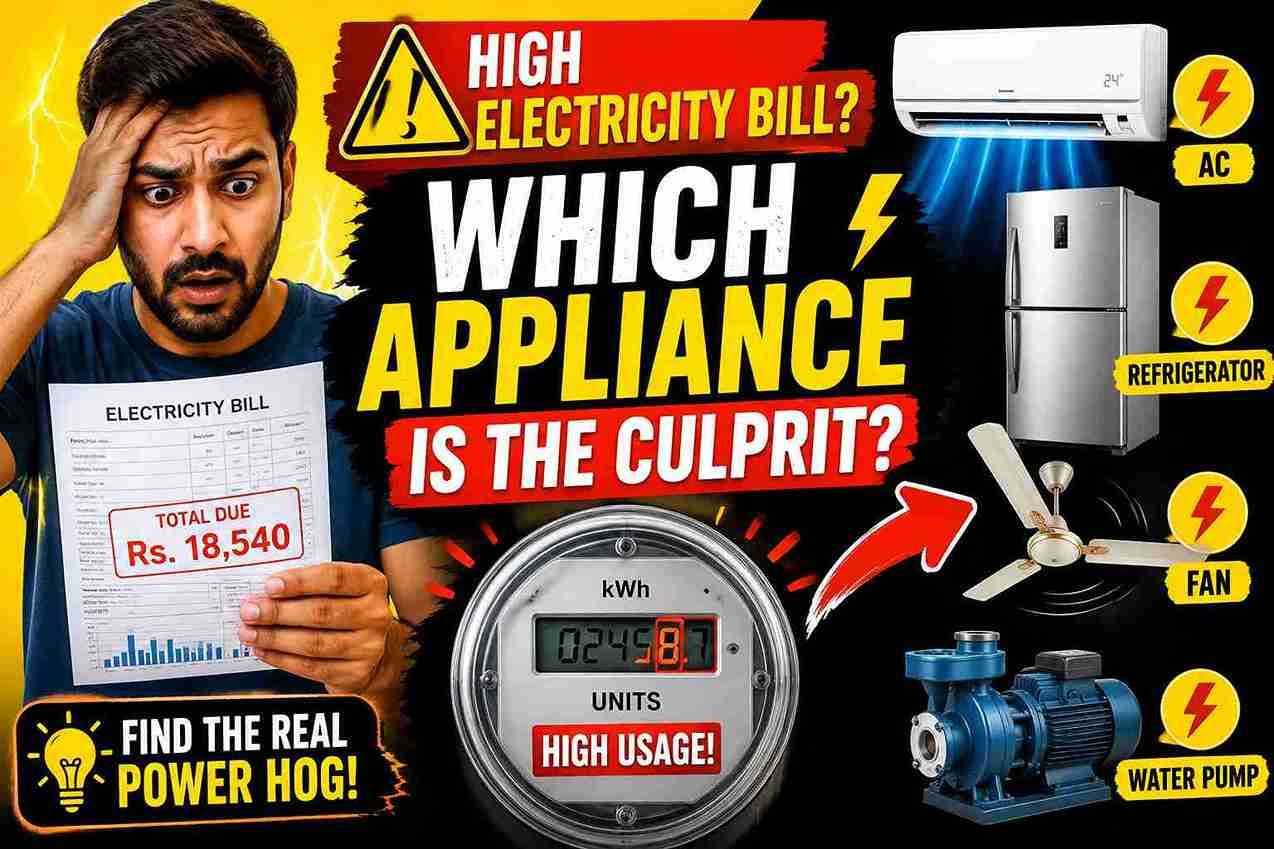
Have you noticed that your electricity bill keeps increasing even though your daily routine hasn’t changed much? Many households face this problem and struggle to figure out which appliance is responsible for the extra cost.
The good news is that you don’t need to be an electrician to identify the cause. By understanding your home’s energy consumption, checking appliance usage patterns, and monitoring your meter reading, you can often find the source of the problem.
Whether you’re a WAPDA consumer, a K-Electric customer in Karachi, or simply trying to lower household expenses, this guide will help you identify which appliances are driving up your electricity costs and what you can do about it.
What Causes a Sudden Increase in Electricity Bills?
A sudden increase in your electricity bill is often caused by one or more appliances consuming more power than usual, increased usage during extreme weather, inefficient equipment, or hidden electricity usage such as standby power consumption.
In Pakistan, electricity bills often rise during summer because air conditioners, refrigerators, and water pumps work harder. Winter can also increase usage if electric heaters are used regularly.
Before blaming the utility company, it’s important to understand where your electricity units are actually being consumed.
How Can You Identify the Appliance Using the Most Electricity?
One of the easiest methods is to compare appliance usage with your monthly bill and units consumed (kWh).
Step 1: Check Your Electricity Bill
Look for:
- Total units consumed
- Billing period
- Previous month’s consumption
- Electricity tariff category
A sudden jump in units usually indicates increased appliance usage rather than a billing error.
Step 2: Observe Recent Changes
Ask yourself:
- Did you install a new appliance?
- Has the weather become hotter?
- Is the AC running longer than before?
- Have family members started working from home?
Even small routine changes can affect overall power usage.
Step 3: Monitor Your Meter Reading
Take a meter reading, switch off selected appliances, and check the reading again after a few hours.
This simple process can help identify unusual electricity consumption.
Which Household Appliances Usually Increase Electricity Bills the Most?
The following appliances are commonly responsible for high household electricity consumption.
| Appliance | Typical Power Usage | Impact on Bill |
|---|---|---|
| Air Conditioner | Very High | High |
| Electric Heater | Very High | High |
| Water Pump | High | Moderate to High |
| Refrigerator | Continuous Usage | Moderate |
| Water Dispenser | Moderate | Moderate |
| Old Ceiling Fans | Moderate | Moderate |
| Incandescent Bulbs | Moderate | Moderate |
Air Conditioners
Air conditioners (AC) are often the largest electricity consumers in Pakistani homes.
A non-inverter AC may consume significantly more energy compared to an inverter AC, especially during long summer days.
Common signs:
- AC runs continuously
- Poor room insulation
- Dirty filters
- Low maintenance
Refrigerators
Refrigerator usage often goes unnoticed because the appliance operates 24 hours a day.
A refrigerator may consume extra electricity if:
- Door seals are damaged
- Cooling settings are too low
- Condenser coils are dirty
- The appliance is more than 10 years old
Water Pumps
Many households experience hidden costs from water pumps.
A faulty pump may:
- Run longer than necessary
- Leak pressure
- Restart frequently
These issues can increase monthly electricity usage without obvious warning signs.
How Can You Test Appliances Individually?
The most effective way to find a high-consuming appliance is to test one appliance at a time while monitoring electricity usage through your meter or an energy monitoring device.
Here’s a practical approach:
- Note your meter reading.
- Run one major appliance for one hour.
- Record the new reading.
- Calculate units consumed.
- Repeat for other appliances.
This process provides a clearer picture of actual energy consumption.
Use Smart Energy Monitoring Devices
Many homeowners now use energy monitoring devices or smart plugs.
Benefits include:
- Real-time electricity tracking
- Appliance-level monitoring
- Better load management
- Faster identification of energy waste
These devices can be particularly useful for households with multiple ACs, refrigerators, and entertainment systems.
Could Standby Power Be Increasing Your Bill?
Yes.
Many appliances continue using electricity even when switched off.
This is known as standby power consumption.
Common examples include:
- Televisions
- Set-top boxes
- Gaming consoles
- Wi-Fi routers
- Microwave ovens
- Phone chargers
Individually, the impact may seem small, but over an entire month, the wasted energy can add up.
How Do Seasonal Changes Affect Electricity Consumption?
Summer Electricity Usage
In Pakistan, summer often causes the biggest increase in electricity bills.
Reasons include:
- Longer AC operation
- Increased fan usage
- Refrigerators working harder
- Water pumps running more frequently
A family using two fans, one refrigerator, and an inverter AC may notice significant differences between winter and summer consumption.
Winter Electricity Usage
Households using electric heaters often experience increased bills during colder months.
Electric heating is generally one of the most power-intensive household activities.
Can Appliance Maintenance Reduce Electricity Usage?
Absolutely.
Proper maintenance improves energy efficiency and helps appliances operate more effectively.
Simple Maintenance Tips
- Clean AC filters monthly.
- Check refrigerator door seals.
- Service water pumps regularly.
- Replace old bulbs with LED bulbs.
- Clean fan blades.
- Inspect electrical connections.
These small steps can help prevent unnecessary energy waste.
How Do Solar Panels Help Monitor Electricity Costs?
Homes with solar panels, inverters, and net metering systems often have better visibility into electricity usage.
Many solar systems provide monitoring apps that show:
- Daily consumption
- Solar generation
- Grid imports
- Grid exports
This makes it easier to identify unusual energy patterns.
For households considering solar energy, understanding appliance consumption first can help determine the right system size.
What Are the Best Energy-Saving Habits at Home?
Here are practical habits that can help manage electricity usage:
- Turn off unused appliances.
- Replace old lighting with LED bulbs.
- Use inverter technology where practical.
- Avoid unnecessary AC usage during peak hours.
- Improve home insulation.
- Reduce standby power consumption.
- Schedule high-power appliances during off-peak hours when applicable.
- Monitor monthly electricity units.
These habits support better energy efficiency without affecting daily comfort.
What Do Energy Experts Recommend?
Organizations such as International Energy Agency emphasize efficient appliance use, energy monitoring, and reducing wasted electricity as important steps toward lower household energy consumption.
Similarly, electricity consumers served by WAPDA and K-Electric can benefit from understanding appliance-level usage rather than focusing only on the final bill amount.
Conclusion
Finding the appliance that is increasing your electricity bill requires a little observation, but the process is usually simpler than people expect. Start by checking your electricity bill, reviewing your meter readings, and monitoring major appliances such as air conditioners, refrigerators, water pumps, and heaters. Small inefficiencies can gradually increase monthly energy costs without being obvious.
The good news is that better energy awareness often leads to smarter decisions. Small changes in energy habits can make a noticeable difference over time. Try these tips and see the difference in your next bill, and explore more electricity-saving guides to continue improving your home’s energy efficiency.