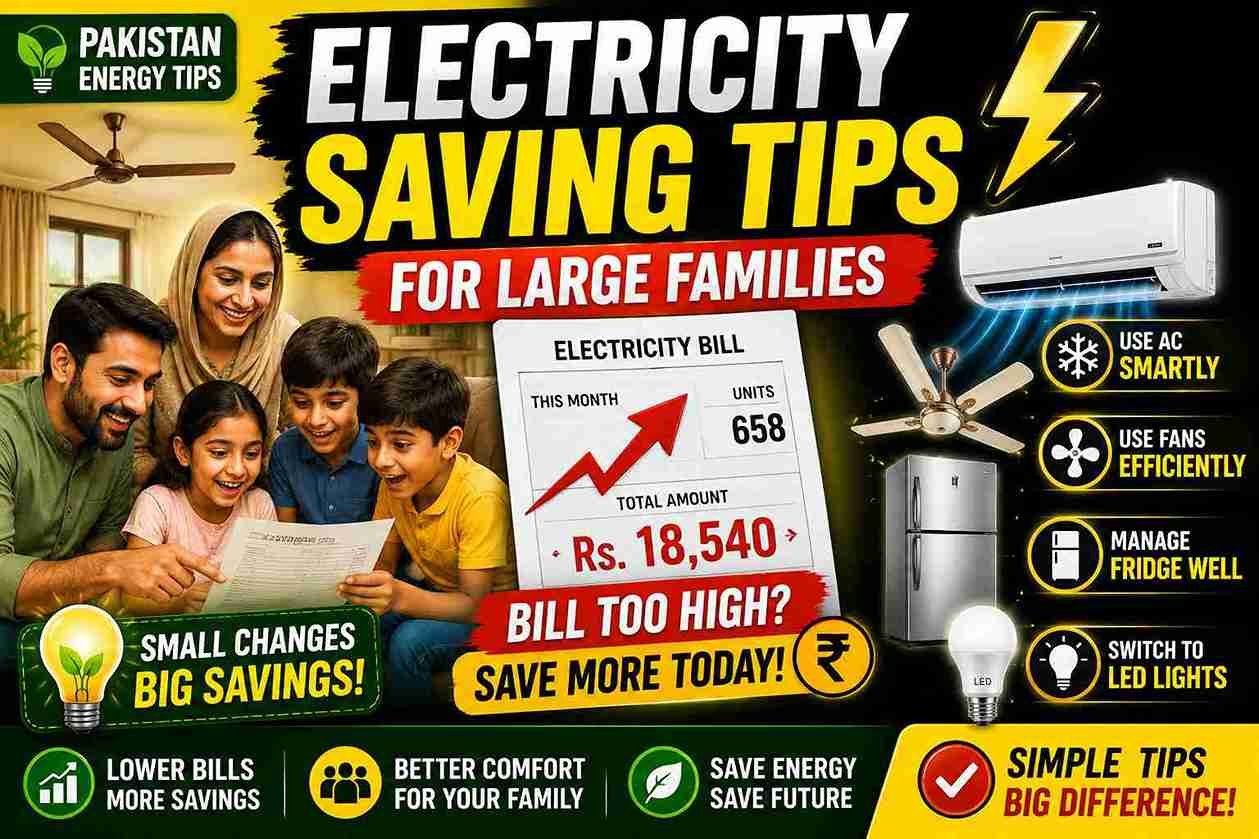
Electricity bills are becoming a real stress for many households, especially where families are large and multiple appliances run all day. In Pakistan, summer months make this problem even worse because air conditioners, fans, and water pumps stay on for long hours.
In this guide, you’ll learn practical electricity saving tips for large families that actually work in real homes. These tips are simple, realistic, and don’t require expensive upgrades.
The goal here is not theory. These are everyday habits and small changes that can help reduce electricity usage, especially for WAPDA and K-Electric users dealing with rising tariffs and load management issues.
What Causes High Electricity Bills in Large Families?
Short answer (Featured Snippet):
High electricity bills in large families usually come from heavy appliance usage, multiple people using devices at the same time, inefficient cooling or heating, and unnoticed standby power consumption. In Pakistan, summer heat and peak-hour usage also increase energy consumption significantly.
In most homes, it’s not just one appliance. It’s the combination of everything running together that increases units (kWh).
Common reasons include:
- Multiple fans and ACs running at the same time
- Old refrigerators consuming more power
- Water pumps running frequently
- Devices left on standby mode
- High usage during peak electricity tariff hours
Even NEPRA-regulated tariff changes and rising energy costs make usage feel more expensive than before.
How Can Large Families Reduce Electricity Consumption at Home?
Short answer (Featured Snippet):
Large families can reduce electricity consumption by using appliances efficiently, switching to LED lighting, managing peak-hour usage, and avoiding unnecessary standby power. Small habit changes like turning off unused fans and optimizing AC temperature can significantly reduce units over time.
Now let’s break it down into practical steps.
1. Use Air Conditioners Smartly (Biggest Saving Area)
In most Pakistani homes, AC is the highest electricity-consuming appliance.
Smart habits:
- Set AC between 24°C and 26°C
- Use ceiling fans with AC for better air circulation
- Clean filters regularly for efficiency
- Prefer inverter AC over non-inverter models
A family using 2–3 rooms with AC can easily reduce consumption just by improving temperature habits.
2. Replace Old Bulbs with LED Lighting
LED bulbs consume far less electricity compared to traditional bulbs.
Why it matters:
- LED uses up to 80% less energy
- Longer lifespan reduces replacement cost
- Less heat generation helps in summer
This is one of the easiest upgrades for any household.
3. Manage Refrigerator Usage Efficiently
Refrigerators run 24/7, so even small improvements matter.
Tips:
- Don’t open the door frequently
- Keep proper ventilation behind the fridge
- Avoid placing hot food directly inside
- Defrost regularly if not frost-free
Older fridges can increase electricity bills without you noticing.
4. Control Water Pump Usage
In many Pakistani homes, water pumps add hidden electricity load.
Better usage habits:
- Avoid repeated short switching
- Store water in tanks instead of frequent pumping
- Fix leakage issues immediately
5. Avoid Standby Power Waste
Devices like TVs, chargers, and routers consume electricity even when not in active use.
Solution:
- Switch off plugs completely
- Use extension boards with switches
- Unplug chargers after use
This small habit can reduce unnoticed energy loss.
6. Understand Peak vs Off-Peak Hours
Electricity distribution systems like K-Electric and WAPDA sometimes apply different load conditions during peak hours.
Practical advice:
- Run heavy appliances (washing machine, iron) in off-peak hours
- Avoid multiple high-load devices at the same time
7. Improve Home Cooling Naturally
Instead of relying only on appliances:
- Use curtains to block heat
- Keep windows open during cooler hours
- Improve airflow inside rooms
- Use light-colored curtains to reflect sunlight
This reduces dependency on AC.
Real-Life Example
A typical Pakistani household with:
- 2 ACs
- 5 fans
- 1 refrigerator
- Water pump
often sees high bills in summer. But by switching to LED lights, optimizing AC usage, and avoiding standby power, families can noticeably reduce monthly units without changing lifestyle completely.
Energy Efficiency and Long-Term Options
For long-term savings, some families explore:
- Solar panels with net metering
- Energy monitoring devices
- Inverter-based appliances
- Battery backup systems
Organizations like the International Energy Agency (IEA) and Energy Star guidelines also promote efficient energy usage practices worldwide.
Conclusion
Managing electricity in a large family doesn’t require drastic changes. It’s about small, consistent habits like using appliances wisely, reducing standby power, and improving cooling efficiency. Over time, these changes can help control rising electricity bills and improve energy awareness.
Try these tips and observe your next bill carefully. Even small changes in energy habits can make a noticeable difference over time.