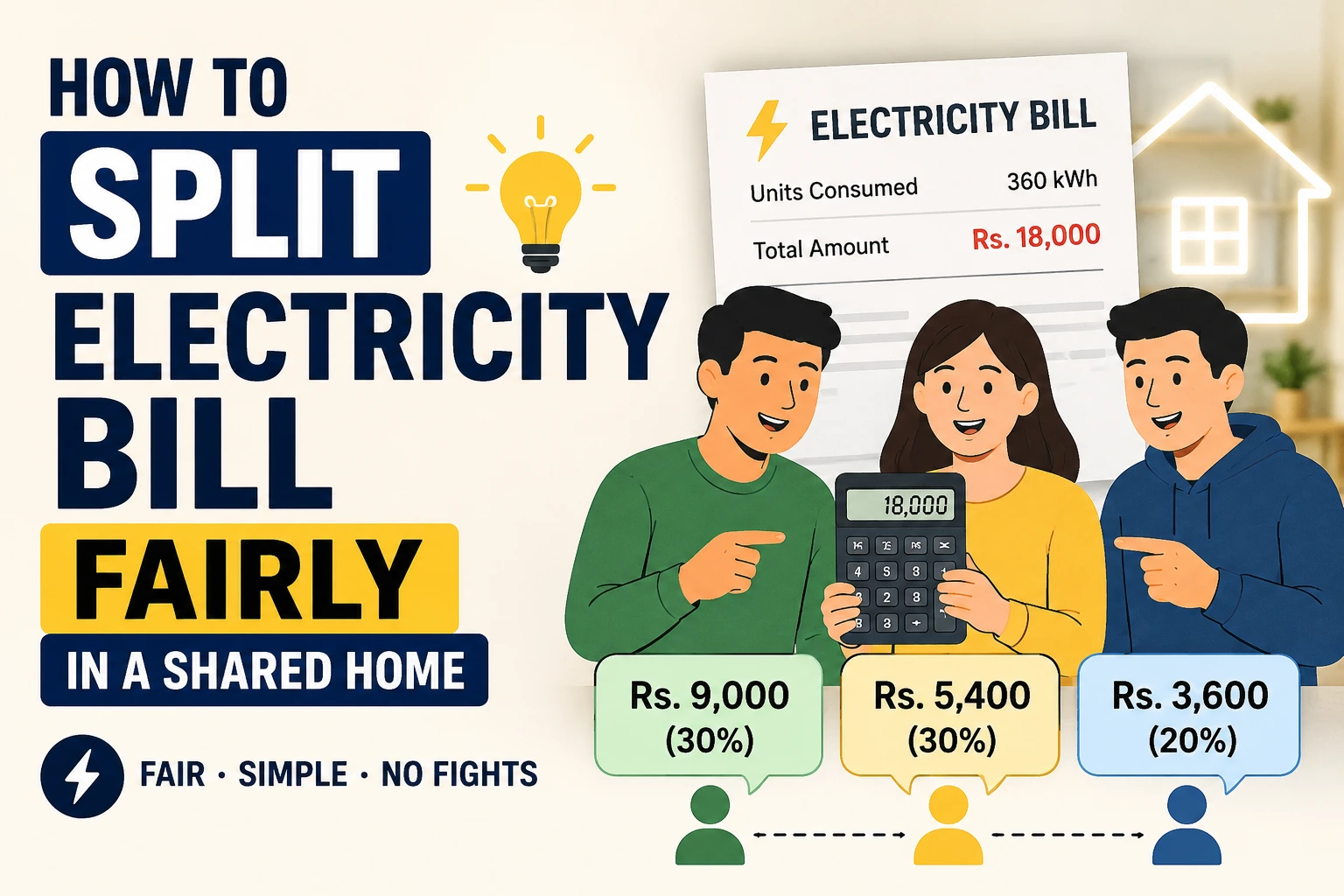
Sharing a home can save money, but electricity bills often create arguments. One roommate uses the air conditioner all day, another works outside the home, while someone else runs multiple devices. When the bill arrives, deciding who should pay what can quickly become frustrating.
If you’ve ever wondered how to split electricity bill fairly, this guide will help. You’ll learn practical methods for dividing electricity costs, tracking energy usage, and preventing conflicts before they start.
With electricity prices rising in Pakistan and many households struggling with higher monthly expenses, fair bill sharing has become more important than ever. Whether you’re living with family, roommates, tenants, or friends, these strategies can help everyone contribute fairly.
What Is the Fairest Way to Split an Electricity Bill?
The fairest way to split an electricity bill is to match each person’s payment to their actual electricity usage whenever possible. If tracking exact usage isn’t practical, using room occupancy, appliance usage, or agreed percentages can create a fair and transparent system.
Many people simply divide the bill equally. While that sounds fair, it doesn’t always reflect reality.
For example:
- One roommate works from home.
- Another is only home at night.
- One person uses an inverter AC daily.
- Another only uses a ceiling fan.
Equal sharing may leave some people paying for electricity they never used.
Why Do Electricity Bill Disputes Happen in Shared Homes?
Most disagreements happen because energy consumption is not equal.
Common reasons include:
- Different daily schedules
- Heavy appliance users
- Air conditioner usage differences
- Gaming computers running for long hours
- Electric heaters during winter
- Water pump operation
- Lack of transparency
In Pakistani households, summer often increases electricity usage significantly because of ACs, fans, and refrigerators working harder.
Which Bill Splitting Method Works Best?
1. Equal Split Method
This is the simplest option.
Formula:
- Total bill ÷ Number of occupants
Example:
| Total Bill | Occupants | Amount Per Person |
|---|---|---|
| Rs. 18,000 | 3 | Rs. 6,000 |
Pros
- Easy to calculate
- No tracking required
- Works well for similar lifestyles
Cons
- Not accurate when usage differs significantly
2. Usage-Based Split
This method is often considered the most accurate.
Each person pays according to their estimated energy consumption.
For example:
| Appliance | User | Estimated Monthly Usage |
| Inverter AC | Roommate A | High |
| Fan + LED | Roommate B | Low |
| Laptop + Fan | Roommate C | Medium |
The final bill is divided according to estimated usage percentages.
This works especially well when one person uses energy-intensive appliances.
3. Room Size Method
Many apartment residents use room size to allocate costs.
Example:
| Room Type | Share |
| Large Room | 40% |
| Medium Room | 35% |
| Small Room | 25% |
This method is useful when larger rooms have:
- Extra lighting
- Additional appliances
- Higher cooling requirements
4. Hybrid Method
Many shared homes find this method the most practical.
Split:
- 50% equally
- 50% based on appliance usage
This balances fairness with simplicity.
How Can You Track Individual Electricity Usage?
Tracking individual electricity usage can be done using smart plugs, energy monitors, appliance wattage calculations, or sub-meters. Even simple tracking methods can make bill sharing more transparent and reduce disagreements.
Several tools can help.
Smart Plugs
Smart plugs track:
- kWh usage
- Device runtime
- Energy costs
They’re useful for:
- Air conditioners
- Electric heaters
- Gaming PCs
- Refrigerators
Energy Monitoring Devices
Whole-home monitors help track:
- Units consumed (kWh)
- Daily usage patterns
- Peak electricity usage periods
Sub-Meters
In some apartments and shared buildings, separate sub-meters can measure electricity consumption for individual rooms.
Should AC Users Pay More?
In most cases, yes.
Air conditioners are often the largest contributor to household electricity bills.
Consider this example:
Roommate A
Uses:
- Inverter AC
- TV
- Laptop
Roommate B
Uses:
- Ceiling fan
- LED bulb
- Mobile charger
Their electricity usage will likely differ significantly.
Even modern inverter AC units consume much more electricity than basic room appliances.
A usage-based adjustment can make bill sharing feel more reasonable.
How Do Rising Electricity Costs Affect Shared Homes in Pakistan?
Electricity prices in Pakistan have increased over the years due to changing tariffs and energy costs.
Both WAPDA consumers and K-Electric users often face:
- Higher monthly bills
- Seasonal increases
- Fuel adjustment charges
- Additional taxes and surcharges
According to guidelines from organizations such as NEPRA, understanding your electricity usage is one of the most effective ways to manage costs.
This makes transparent bill sharing even more important.
Can Energy-Saving Habits Make Bill Splitting Easier?
Absolutely.
Lower bills mean fewer arguments.
Some practical habits include:
Use LED Bulbs
LEDs consume much less electricity than traditional bulbs.
Manage Peak-Hour Usage
Try to avoid running multiple heavy appliances during high-demand periods when possible.
Maintain Appliances
Well-maintained appliances generally operate more efficiently.
Reduce Standby Power Consumption
Unplug:
- Chargers
- TVs
- Gaming consoles
- Computer accessories
when not in use.
Optimize Refrigerator Usage
Avoid frequently opening the refrigerator door and ensure proper sealing.
Use Energy-Efficient Appliances
Products that follow Energy Star-style efficiency standards often use less power over time.
Real-Life Example: A Shared Home in Lahore
Consider a three-person household.
Person A
Uses:
- Inverter AC
- Laptop
- TV
Person B
Uses:
- Ceiling fan
- LED lighting
Person C
Uses:
- Refrigerator share
- Fan
- Work computer
Monthly bill:
Rs. 24,000
If divided equally:
- Rs. 8,000 each
But actual usage analysis shows:
| Person | Usage Share |
| A | 50% |
| B | 20% |
| C | 30% |
A fairer split becomes:
| Person | Amount |
| A | Rs. 12,000 |
| B | Rs. 4,800 |
| C | Rs. 7,200 |
This often feels much more reasonable to everyone involved.
What If Your Home Uses Solar Panels?
Homes with solar systems may have lower grid electricity consumption.
If your property has:
- Solar panels
- Net metering
- Battery storage systems
- Inverters
then bill calculations can become more complex.
In such cases:
- Calculate grid electricity charges.
- Account for solar generation benefits.
- Agree on how shared solar savings will be distributed.
Clear communication helps avoid misunderstandings.
Best Rules for Avoiding Electricity Bill Arguments
Follow these simple guidelines:
- Agree on a payment method before moving in.
- Review bills together monthly.
- Track heavy appliance usage.
- Discuss seasonal changes.
- Use written agreements if needed.
- Encourage energy-efficient habits.
- Be transparent about unusual usage.
These small steps can prevent many conflicts.
Final Words
Learning how to split electricity bill fairly is about more than dividing a number on a bill. It’s about transparency, communication, and understanding how electricity is actually used within a shared home. Whether you choose an equal split, usage-based system, or a hybrid approach, the goal is to create a method everyone agrees is reasonable.
As electricity costs continue to rise, especially for Pakistani households, tracking energy usage and encouraging efficient habits can help reduce stress and improve fairness. Small changes in energy habits can make a noticeable difference over time.